
Mail Merge Tutorial
This tutorial sends a first personalized campaign from Google Sheets in about five minutes. Make sure Mail Merge for Gmail is installed first.
1. Prepare your spreadsheet
Section titled “1. Prepare your spreadsheet”In Mail Merge, each row of your sheet is one email. The only requirement is a column with the recipients’ email addresses. Every other column becomes data you can insert into the email.
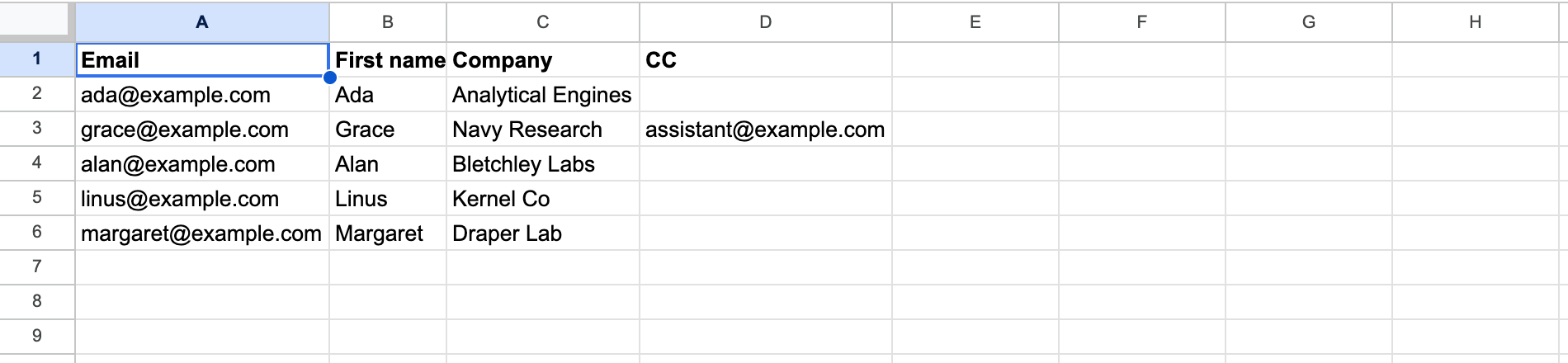
A few rules that keep things simple:
- Put column names in the first row. They become your merge tags, so give them readable names such as
First nameorCompany. - One recipient per row. To send the same email to several people, see Multiple recipients.
- Empty rows are skipped, and a row without a valid address is marked Missing recipient when you send.
2. Open the campaign builder
Section titled “2. Open the campaign builder”Go to Extensions → Mail Merge for Gmail → ▶️ New campaign. The builder opens on top of your sheet with the recipients already loaded: the To row shows which column holds the addresses, and the send button counts the valid emails found.
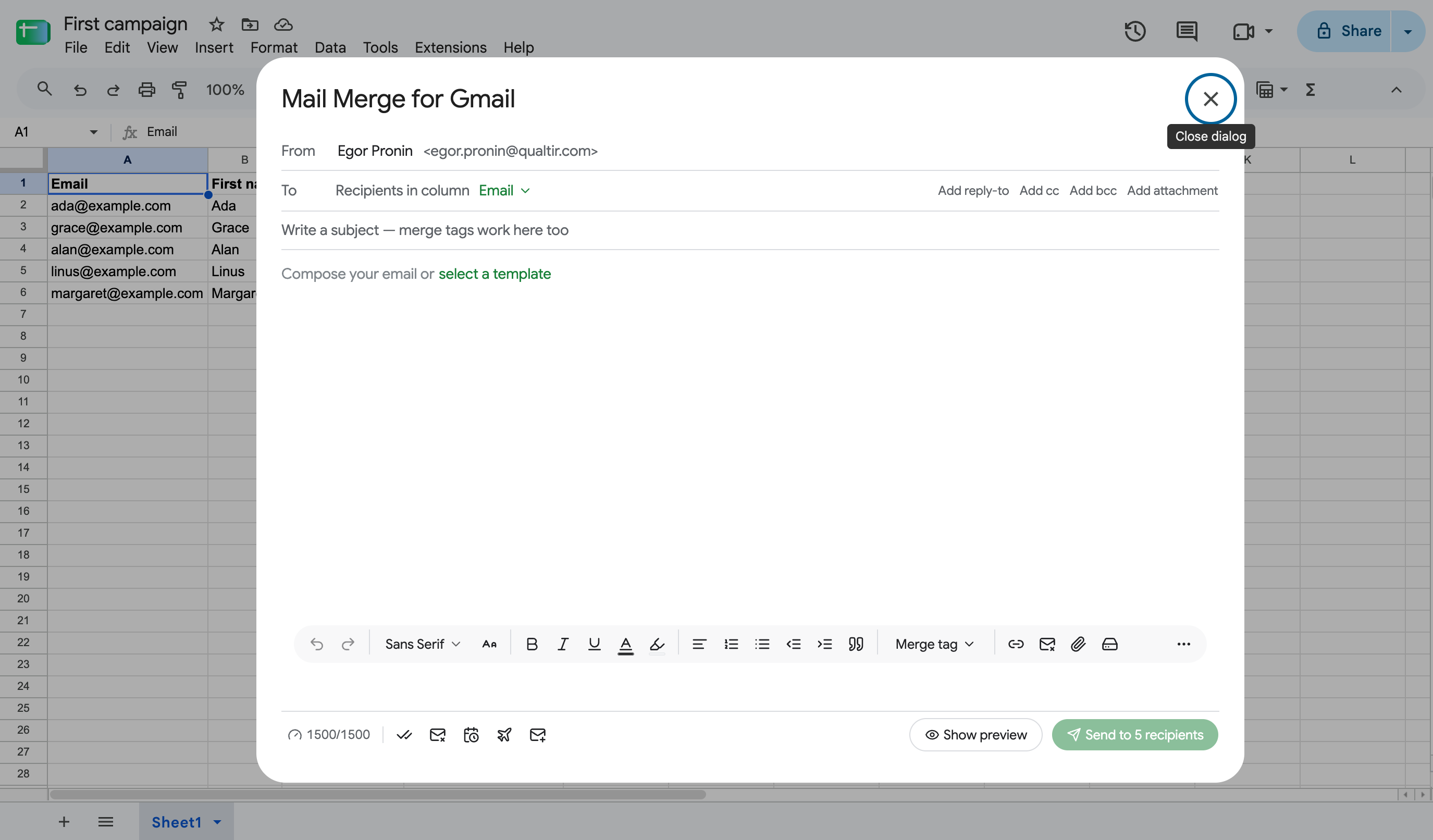
The first time, Google asks you to authorize the add-on. Approve every permission.
3. Write the email
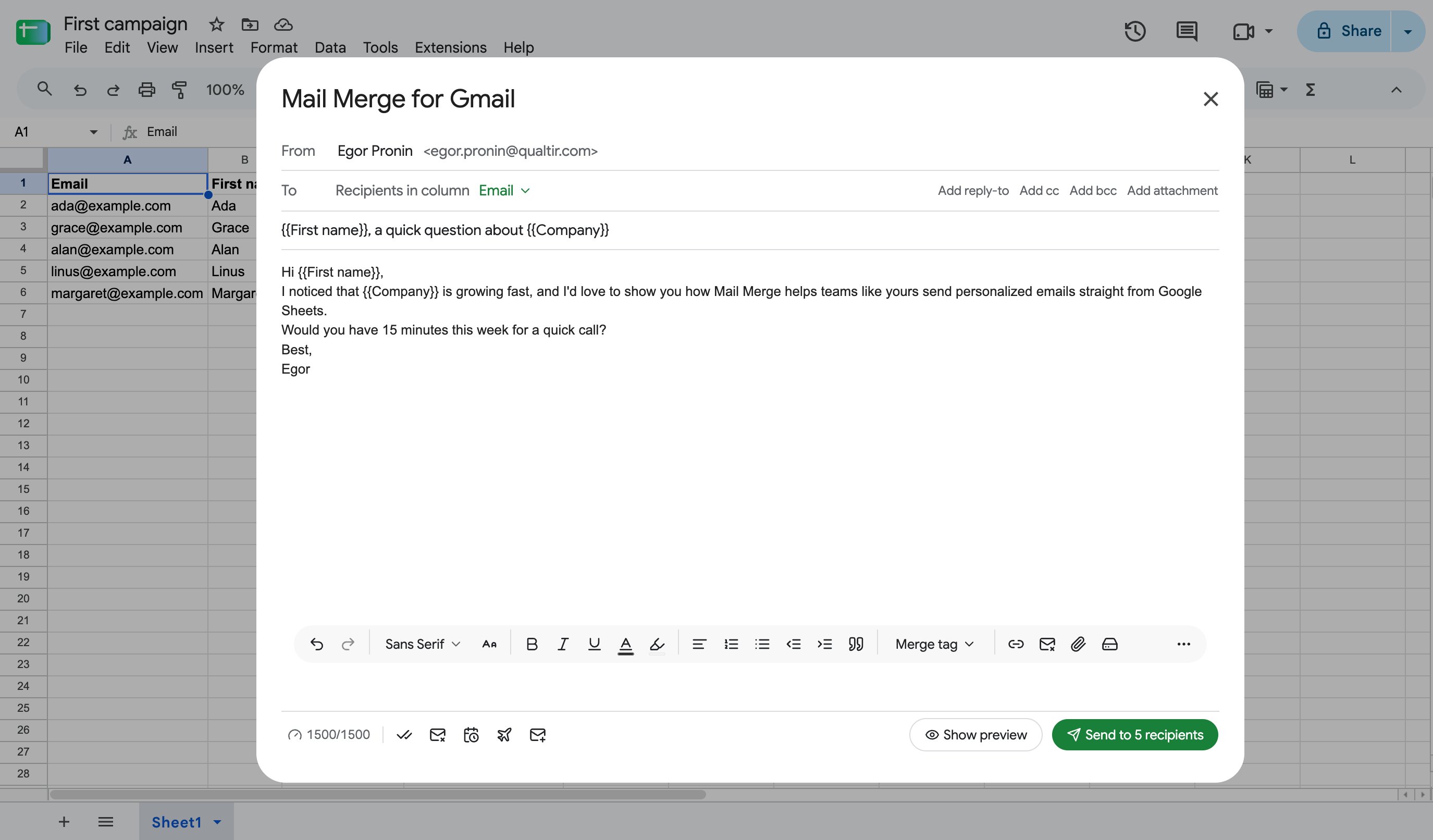
Section titled “3. Write the email”Type the subject and the body as you would in Gmail. The toolbar at the bottom of the editor has the usual formatting: fonts, bold and italics, colors, lists, alignment, links, and attachments.
Personalize with merge tags
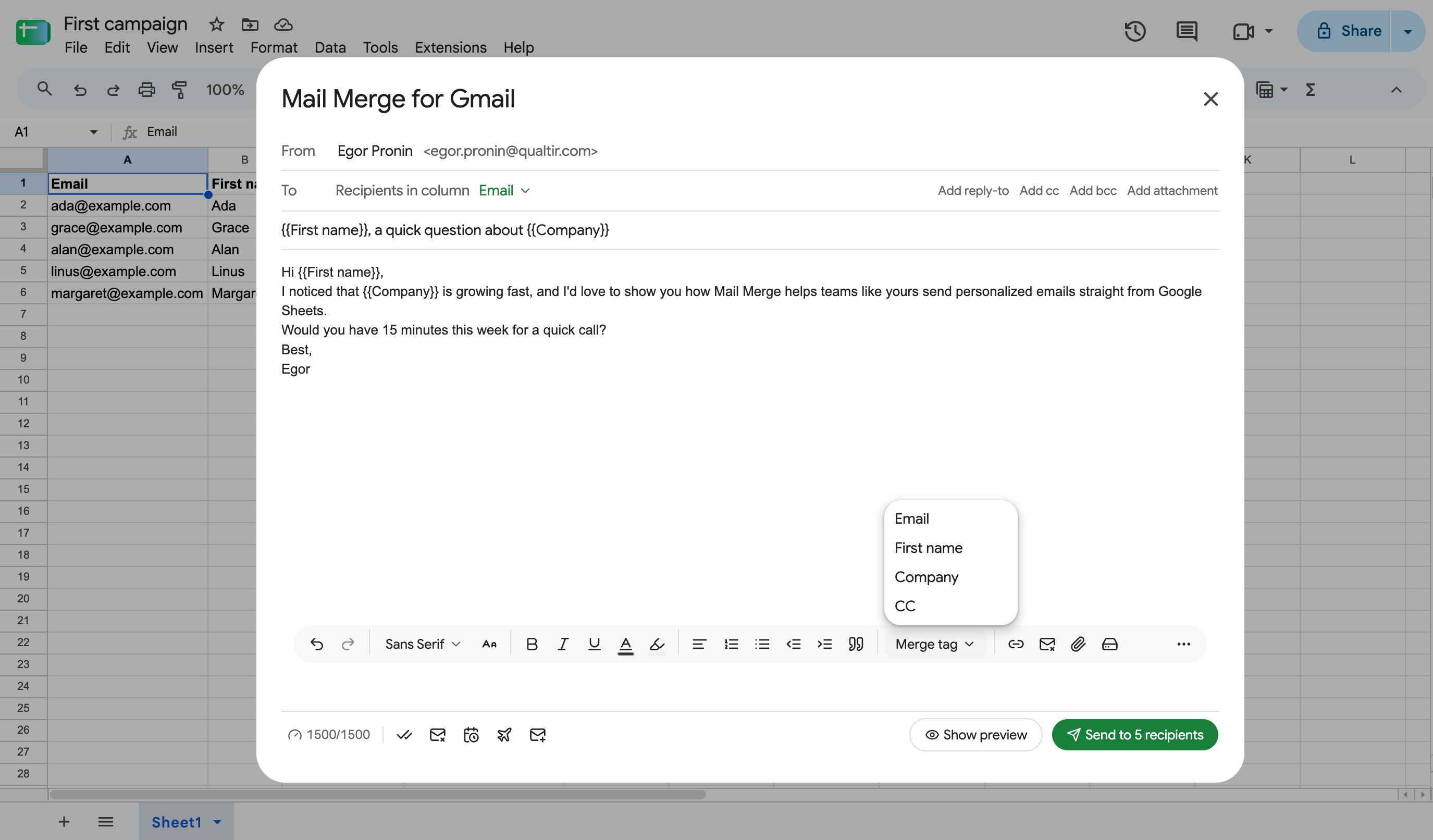
Section titled “Personalize with merge tags”A merge tag is a column name wrapped in double curly braces, for example {{First name}}. When the campaign sends, each tag is replaced with the value from that recipient’s row. Tags work in the subject line as well as in the body.
You do not have to type them: click Merge tag in the toolbar and pick a column.
Use a saved template
Section titled “Use a saved template”Instead of writing from scratch, click select a template in the empty editor to insert one of your templates. The subject and body fill in, and you can edit them freely before sending.
4. Preview every email
Section titled “4. Preview every email”Click Show preview. Mail Merge renders the email for each recipient, with the merge tags replaced, and lets you page through them with the arrows. A Deliverability check warns about common problems, for example a missing unsubscribe link.
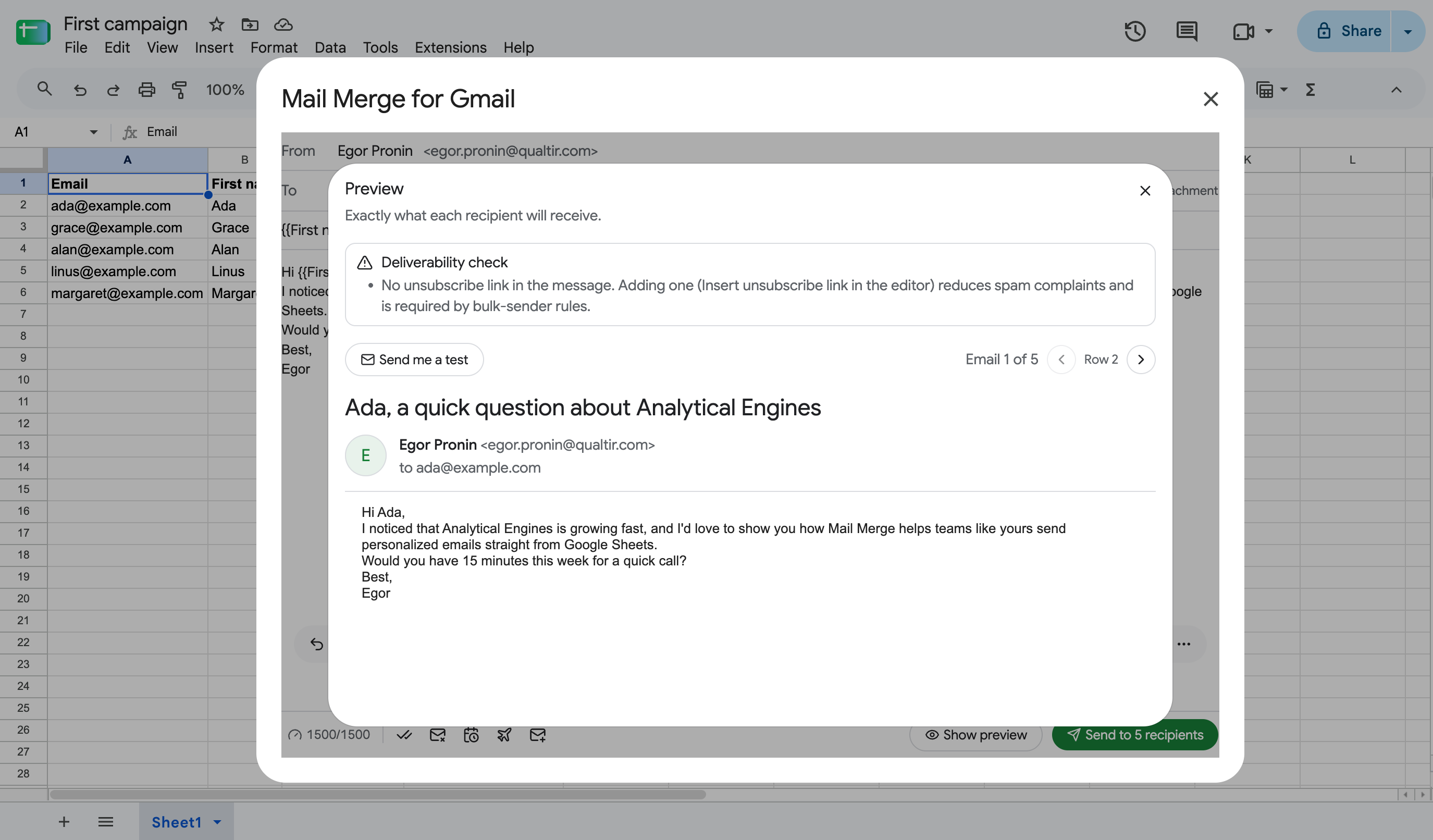
Send me a test emails the recipient currently shown to your own inbox, so you can check how it looks in a real mail client.
5. Send
Section titled “5. Send”Click Send to N recipients and confirm. The emails leave through your own Gmail account, and the builder shows “Your campaign is on its way”.
Mail Merge adds a 📮 status column to your sheet, named after the campaign and the date. Each row gets a status that updates as the campaign progresses:
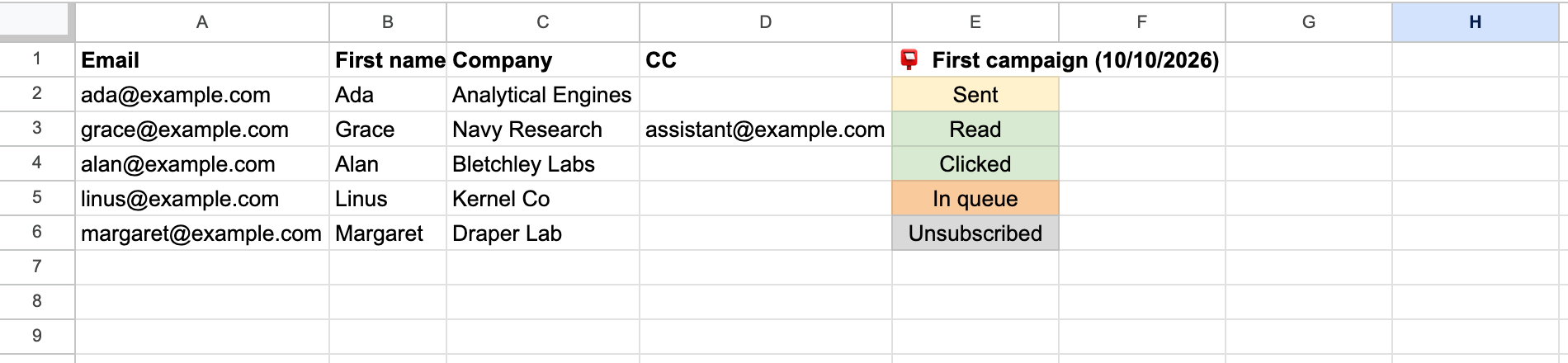
| Status | Meaning |
|---|---|
| In queue | The email is waiting to be sent. |
| Scheduled | The campaign starts later (scheduled or Autopilot). |
| Sent | The email left your Gmail account. |
| Read | The recipient opened it (needs open tracking). |
| Clicked | The recipient clicked a link in it. |
| Unsubscribed | The recipient used the unsubscribe link, or was skipped because they had unsubscribed earlier. |
| Paused / Cancelled | You paused or stopped the campaign. |
| Cooldown | Gmail temporarily refused to send; Mail Merge retries on its own. |
| Error / Missing recipient / Attachment Error | The row could not be sent. The cell note explains why. |
Open Extensions → Mail Merge for Gmail → 🔄 Refresh tracking at any time to pull the latest statuses into the sheet. The full list, with what to do about each status, is on Campaign and recipient statuses.
What next
Section titled “What next”- Follow the campaign in 📨 Campaigns: progress, per-recipient statuses, opens and clicks. See Campaigns.
- Send later with Schedule send, or drip a large list over several days with Autopilot. See Campaign scheduling.
- Add automatic follow-ups to people who did not open or click. See Follow-up sequences.
- Stay under your daily sending limit.